Buy ruhrgebiet.info ?
We are moving the project
ruhrgebiet.info .
Are you interested in purchasing the domain
ruhrgebiet.info ?
domain@kv-gmbh.de · 0541-91531010
Buy ruhrgebiet.info ?
What is arithmetic?
Arithmetic is a branch of mathematics that deals with the study of numbers and the basic operations used to manipulate them, such as addition, subtraction, multiplication, and division. It is the foundation of mathematics and is essential for everyday tasks like counting, measuring, and solving problems involving quantities. Arithmetic helps us understand the relationships between numbers and how they can be combined or separated to find solutions. **
What is fraction arithmetic?
Fraction arithmetic involves performing mathematical operations such as addition, subtraction, multiplication, and division with fractions. It requires understanding how to work with fractions, including finding common denominators, simplifying fractions, and converting between mixed numbers and improper fractions. Fraction arithmetic is essential in many real-life situations, such as cooking, construction, and measurements, where quantities are often represented as fractions. Mastering fraction arithmetic is important for developing strong problem-solving skills and a deeper understanding of mathematical concepts. **
Similar search terms for Arithmetic
Top-Angebote
Products related to Arithmetic:
-
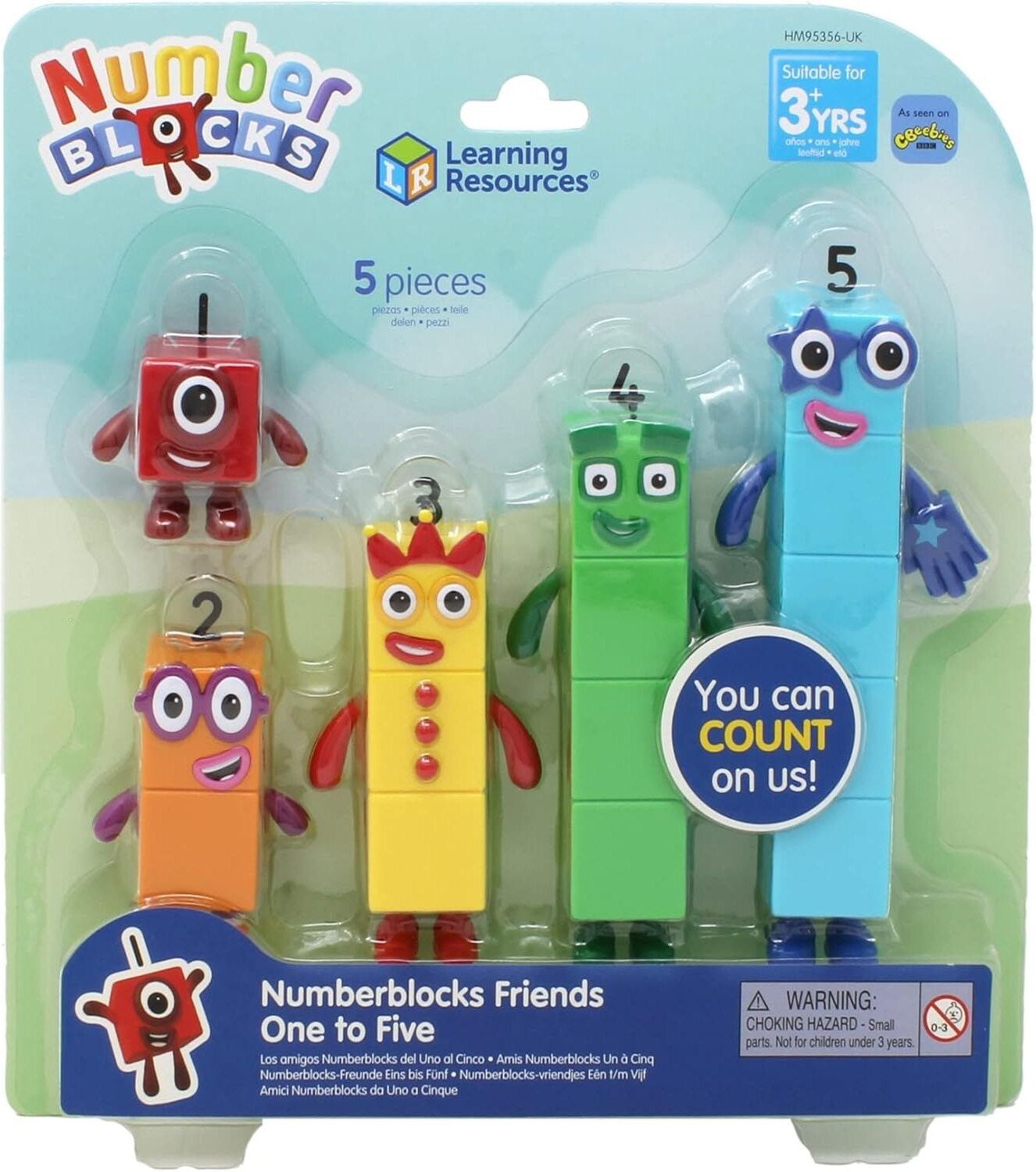
Learning Resources Numberblocks Friends One to Five Set - Counting and Arithmetic for Ages 1-5Five colorful Numberblocks figures encourage counting and basic arithmetic through playful storytelling. Made from durable ABS and PVC plastic for lasting imaginative play at home or in the classroom.14,17 £*Shipping: 3,95 £Secure redirect to the provider
-
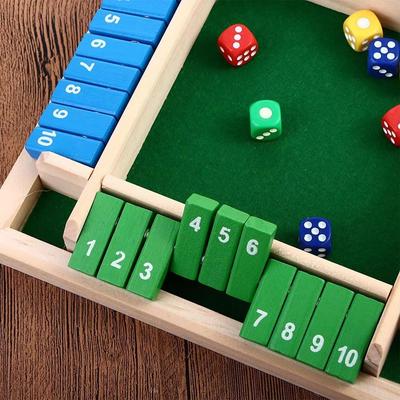
Inspire Curations 4 Player Board Game Shut The Box Game Wooden Arithmetic Dice Flip Tile Set coloredRainy afternoons, family nights, and classroom breaks get a lot more fun when everyone can jump in fast. This compact wooden dice board game blends quick rounds with simple number strategy, so it feels exciting for kids and surprisingly competitive...83,90 $*Shipping: 0,00 $Secure redirect to the provider
-
From the Archives: Black History and Culture Value PackThis brand-new series is rooted in a profound commitment to shedding light on some of the important -- and often lesser-known -- aspects of Black history. From the Archives features landmarks, events, people, and artistic endeavors that have played...27,99 $*Shipping: 0,00 $Secure redirect to the provider
-
Orion The Book of Humans by Adam Rutherford – A Brief History of Culture, Sex, War & EvolutionWHAT MAKES US HUMAN? Waging war? Sex for pleasure? Creating art? Mastery of fire? In this thrilling tour of the animal kingdom, Adam Rutherford tells the story of how we became the unique creatures we are today. Illuminated by the latest scientific discoveries, THE BOOK OF HUMANS is a dazzling compendium of what unequivocally fixes us as animals, and reveals how we are extraordinary among them.4,98 £*Shipping: 1,99 £Secure redirect to the provider


-
How many arithmetic operations?
The number of arithmetic operations depends on the specific context or problem being considered. In general, arithmetic operations include addition, subtraction, multiplication, and division. The number of operations can vary based on the complexity of the problem and the specific calculations required. It is important to carefully analyze the problem to determine the exact number of arithmetic operations needed to solve it. **
-
How does fraction arithmetic work?
Fraction arithmetic involves adding, subtracting, multiplying, and dividing fractions. To add or subtract fractions, you need to have a common denominator. To multiply fractions, you simply multiply the numerators and denominators. To divide fractions, you multiply by the reciprocal of the second fraction. It is important to simplify the resulting fraction by reducing it to its simplest form. **
-
What is arithmetic question 34?
Arithmetic question 34 typically involves solving a word problem or numerical equation related to basic arithmetic operations such as addition, subtraction, multiplication, or division. It may require calculating percentages, fractions, or solving for an unknown variable. The specific content of question 34 can vary depending on the context of the arithmetic test or assignment. **
-
What is the arithmetic hierarchy?
The arithmetic hierarchy is a classification system used in mathematical logic to categorize sets of natural numbers based on the complexity of their definitions. It consists of an infinite sequence of levels, with each level representing a different degree of complexity. At the lowest level are the arithmetic sets, which can be defined using basic arithmetic operations and quantifiers. As we move up the hierarchy, sets become increasingly complex and may require more powerful tools such as unbounded quantifiers or infinite iterations of quantifiers. **


What are the arithmetic laws?
The arithmetic laws are a set of rules that govern the basic operations of arithmetic, including addition, subtraction, multiplication, and division. These laws include the commutative property, which states that the order of the numbers does not affect the result of addition or multiplication; the associative property, which states that the grouping of numbers does not affect the result of addition or multiplication; the distributive property, which relates addition and multiplication; and the identity and inverse properties, which define the existence of additive and multiplicative identities and inverses. These laws are fundamental to understanding and solving mathematical problems involving numbers and operations. **
How does modular arithmetic work?
Modular arithmetic is a system of arithmetic for integers that considers only the remainder when one integer is divided by another. In modular arithmetic, we work within a fixed range of numbers, called the modulus. When performing addition, subtraction, multiplication, or division in modular arithmetic, we calculate the result as if we were working with regular integers, and then take the remainder when dividing by the modulus. This allows us to work with a finite set of numbers and can be useful in various applications such as cryptography, computer science, and number theory. **
Top-Angebote
Products related to Arithmetic:
-
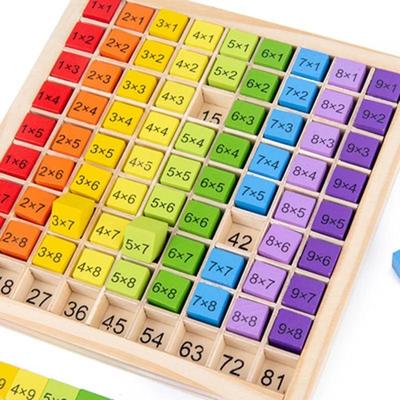
Multisell Products Hub Montessori Educational Wooden Math Toys For Kids Multiplication Table & Arithmetic Teaching Aid Montessori Educational Wooden Math Toys For Kids Multiplication Table & Arithmetic Teaching AidIgnite your childs love for learning with our Montessori Educational Wooden Math Toys, designed to make learning multiplication and arithmetic fun and engaging. Crafted with care, this educational toy is perfect for children aged 3 and up, offering...39,97 $*Shipping: 0,00 $Secure redirect to the provider
-
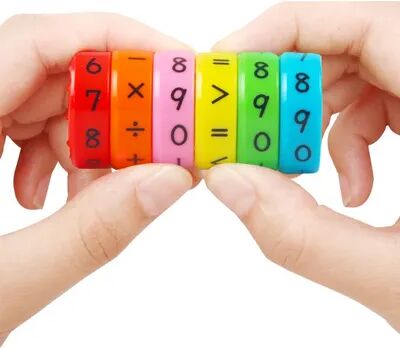
Smart Shopping Spot Children's Creative Magnetic Math Toy Set Early Education Arithmetic With Addition, Subtraction, Multiplication Children's Creative Magnetic Math Toy Set Early Education Arithmetic With Addition, Subtraction, MultiplicationUnlock your child's potential with the Children's Creative Magnetic Math Toy Set. This educational toy is designed to engage young minds in a fun and interactive way, teaching essential math skills like addition, subtraction, multiplication, and...29,97 $*Shipping: 0,00 $Secure redirect to the provider
-
Learning Resources Numberblocks Friends One to Five Set - Counting and Arithmetic for Ages 1-5Five colorful Numberblocks figures encourage counting and basic arithmetic through playful storytelling. Made from durable ABS and PVC plastic for lasting imaginative play at home or in the classroom.14,17 £*Shipping: 3,95 £Secure redirect to the provider
-
Inspire Curations 4 Player Board Game Shut The Box Game Wooden Arithmetic Dice Flip Tile Set coloredRainy afternoons, family nights, and classroom breaks get a lot more fun when everyone can jump in fast. This compact wooden dice board game blends quick rounds with simple number strategy, so it feels exciting for kids and surprisingly competitive...83,90 $*Shipping: 0,00 $Secure redirect to the provider
-
What is arithmetic?
Arithmetic is a branch of mathematics that deals with the study of numbers and the basic operations used to manipulate them, such as addition, subtraction, multiplication, and division. It is the foundation of mathematics and is essential for everyday tasks like counting, measuring, and solving problems involving quantities. Arithmetic helps us understand the relationships between numbers and how they can be combined or separated to find solutions. **
-
What is fraction arithmetic?
Fraction arithmetic involves performing mathematical operations such as addition, subtraction, multiplication, and division with fractions. It requires understanding how to work with fractions, including finding common denominators, simplifying fractions, and converting between mixed numbers and improper fractions. Fraction arithmetic is essential in many real-life situations, such as cooking, construction, and measurements, where quantities are often represented as fractions. Mastering fraction arithmetic is important for developing strong problem-solving skills and a deeper understanding of mathematical concepts. **
-
How many arithmetic operations?
The number of arithmetic operations depends on the specific context or problem being considered. In general, arithmetic operations include addition, subtraction, multiplication, and division. The number of operations can vary based on the complexity of the problem and the specific calculations required. It is important to carefully analyze the problem to determine the exact number of arithmetic operations needed to solve it. **
-
How does fraction arithmetic work?
Fraction arithmetic involves adding, subtracting, multiplying, and dividing fractions. To add or subtract fractions, you need to have a common denominator. To multiply fractions, you simply multiply the numerators and denominators. To divide fractions, you multiply by the reciprocal of the second fraction. It is important to simplify the resulting fraction by reducing it to its simplest form. **
Similar search terms for Arithmetic
-
From the Archives: Black History and Culture Value PackThis brand-new series is rooted in a profound commitment to shedding light on some of the important -- and often lesser-known -- aspects of Black history. From the Archives features landmarks, events, people, and artistic endeavors that have played...27,99 $*Shipping: 0,00 $Secure redirect to the provider
-
Orion The Book of Humans by Adam Rutherford – A Brief History of Culture, Sex, War & EvolutionWHAT MAKES US HUMAN? Waging war? Sex for pleasure? Creating art? Mastery of fire? In this thrilling tour of the animal kingdom, Adam Rutherford tells the story of how we became the unique creatures we are today. Illuminated by the latest scientific discoveries, THE BOOK OF HUMANS is a dazzling compendium of what unequivocally fixes us as animals, and reveals how we are extraordinary among them.4,98 £*Shipping: 1,99 £Secure redirect to the provider
-
Superfresco Easy Industry Black WallpaperThe combination of deep charcoal and steel grey colors create a depth and atmosphere to this paper which will reflect in your home. Style with matt concrete textures and glossy metallic finishes to complete your scheme.60,00 $*Shipping: 0,00 $Secure redirect to the provider
-
Timeline Refresh 2026 - Clutch Box by Zygomatic, Card Game for 2-4 Players, Ages 10+, History and Culture TriviaTest your knowledge of history, culture, and everyday events with Timeline Refresh 2026, a compact card game for family and friends. Each round challenges players to place event cards in the correct chronological position, using the timeline already on the table as their guide. Choose an event card, estimate when it happened, and add it to the timeline. If your placement is correct, the card remains in play; if not, it is removed. The first player to position all their cards correctly wins. The game's accessible rules and varied subject matter make it an engaging way to challenge your memory and learn interesting facts while playing. The clutch box format is designed for convenient storage and portability.9,99 £*Shipping: 3,95 £Secure redirect to the provider
-
What is arithmetic question 34?
Arithmetic question 34 typically involves solving a word problem or numerical equation related to basic arithmetic operations such as addition, subtraction, multiplication, or division. It may require calculating percentages, fractions, or solving for an unknown variable. The specific content of question 34 can vary depending on the context of the arithmetic test or assignment. **
-
What is the arithmetic hierarchy?
The arithmetic hierarchy is a classification system used in mathematical logic to categorize sets of natural numbers based on the complexity of their definitions. It consists of an infinite sequence of levels, with each level representing a different degree of complexity. At the lowest level are the arithmetic sets, which can be defined using basic arithmetic operations and quantifiers. As we move up the hierarchy, sets become increasingly complex and may require more powerful tools such as unbounded quantifiers or infinite iterations of quantifiers. **
-
What are the arithmetic laws?
The arithmetic laws are a set of rules that govern the basic operations of arithmetic, including addition, subtraction, multiplication, and division. These laws include the commutative property, which states that the order of the numbers does not affect the result of addition or multiplication; the associative property, which states that the grouping of numbers does not affect the result of addition or multiplication; the distributive property, which relates addition and multiplication; and the identity and inverse properties, which define the existence of additive and multiplicative identities and inverses. These laws are fundamental to understanding and solving mathematical problems involving numbers and operations. **
-
How does modular arithmetic work?
Modular arithmetic is a system of arithmetic for integers that considers only the remainder when one integer is divided by another. In modular arithmetic, we work within a fixed range of numbers, called the modulus. When performing addition, subtraction, multiplication, or division in modular arithmetic, we calculate the result as if we were working with regular integers, and then take the remainder when dividing by the modulus. This allows us to work with a finite set of numbers and can be useful in various applications such as cryptography, computer science, and number theory. **
* All prices are inclusive of VAT and, if applicable, plus shipping costs. The offer information is based on the details provided by the respective shop and is updated through automated processes. Real-time updates do not occur, so deviations can occur in individual cases. ** Note: Parts of this content were created by AI.